
White Toner Printer vs DTF Printer: What’s Best for Your Business?
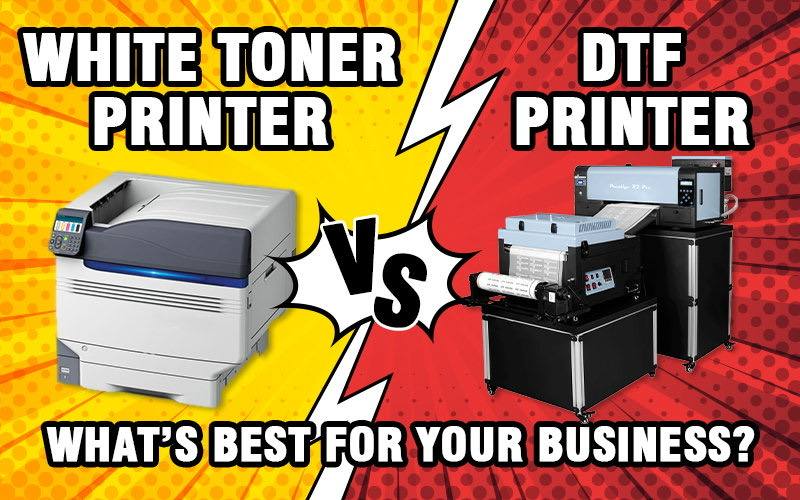
In the dynamic world of printing, experienced industry players who have long relied on white toner technology now find themselves grappling with a crucial decision: white toner printer vs DTF printer—which is best for your business. This dilemma is further compounded for current white toner printer users who are contemplating whether upgrading to a DTF printer or integrating one into their setup is the right move. In this post, we delve deep into exploring the similarities, differences, pros, and cons of each technology. Our aim is to provide you with the insights needed to make a thoughtful decision that best suits the needs and aspirations of your business.
Table of Contents
- How Does White Tonner Work?
- How Does DTF Printer Work?
- White Toner Printer vs DTF Printer: Similarities
- White Toner Printer vs DTF Printer: Differences
- White Toner Printer vs DTF Printer: the Pros and Cons
- White Toner Printer vs DTF Printer: What’s Best for Your Business?
- When to choose white torner printers over DTF printers?
- When to choose DTF printers over white torner printers?
- Combining White Toner and DTF Printers
- Conclusion
How Does White Tonner Work?
A white toner printer is a type of color laser printer that incorporates white toner along with cyan, magenta, and yellow toners. This combination allows the printer to create vibrant and opaque prints on dark or colored substrates.
The operation of a white toner printer is straightforward. Here’s a step-by-step explanation of how it works:
- Design Preparation: The initial step involves processing the image using RIP software, which converts it into a format suitable for printing on the white toner printer.
- Printing the Transfer Paper: Next, send the design file to the printer, ensuring you use the appropriate film and paper (Sheet A) specifically designed for white toner printing, selected based on the substrate onto which the design will be transferred.
- Applying Adhesive to Print: Once the print is out of the printer, it lacks adhesive. Instead of using adhesive powder, a white toner printer employs a marrying process to apply adhesive from Sheet B to the prints. In this process, you peel off the cover sheet from Sheet B, place the adhesive side onto the print, and then use a heat press to firmly adhere the adhesive to the print.
- Heat Pressing: Follow the settings for your material and blank and press for the recommended time and temperature.
- Peeling: Since most transfer films and papers used with white toner printers are cold peel, you may need to wait until they cool down before peeling off the cover sheet from Sheet B.
- A Second Pressing: To complete the project, you need to press the design a second time without the protective film/paper cover sheet. This additional press embeds the design into the substrates, resulting in a professional-looking matte appearance once finished.
To gain a better understanding of how a white toner printer works, you might find the following video helpful:
How Does DTF Printer Work?
DTF (Direct-to-film) Printing is a relatively recent digital printing technology that has emerged within the past few years. It is used to transfer designs directly onto garments or other substrates. Unlike Direct to Garment (DTG) printing, which prints directly onto the garment, DTF involves printing designs onto a PET film initially and then transferring them onto the garment or substrate using a heat press. This technique provides numerous benefits over conventional printing methods, making it highly favored among businesses seeking efficient and high-quality printing solutions.
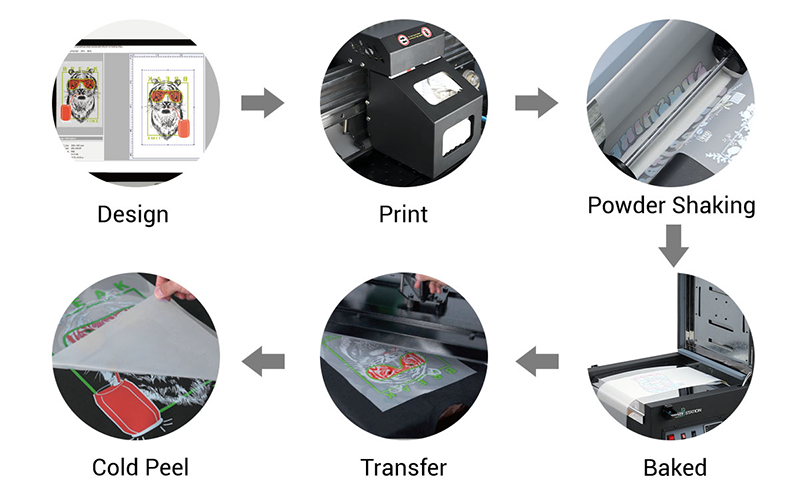
DTF printing involves additional steps compared to a white toner printer, including powder application and heat curing. Here is a detailed step-by-step guide on how DTF printing operates:
Design Preparation: Creating and preparing the design file is typically the initial step in any printing process. For most thermal transfer techniques, including DTF printing and white toner printing, this often involves mirroring the design. Users can accomplish this either within design software or RIP (Raster Image Processor) software.
Printing Transfer Film: To produce the transfer film for DTF printing, you’ll need a DTF printer, DTF ink, and DTF films specifically designed for this printing technology.
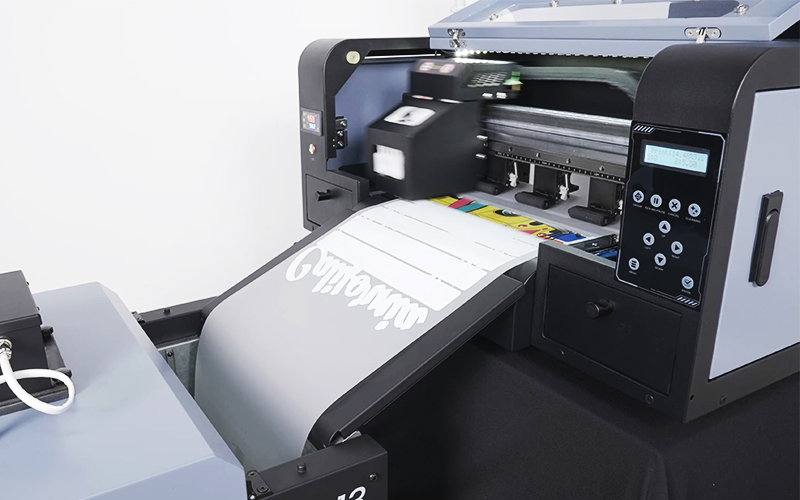 How To Print DTF Transfer Film?
 Powder Shaking: Users have the option to either manually apply the adhesive powder or use a powder shaker machine to achieve optimal results and maximize efficiency.
Curing: Curing is essential in DTF printing to securely bond and set the printed design onto the garment or substrate, ensuring durability, vibrant colors, and resistance to washing. While standalone DTF curing ovens exist, utilizing a powder shaker machine with integrated curing functionality enhances efficiency, streamlines workflow, increases productivity, and reduces labor costs.
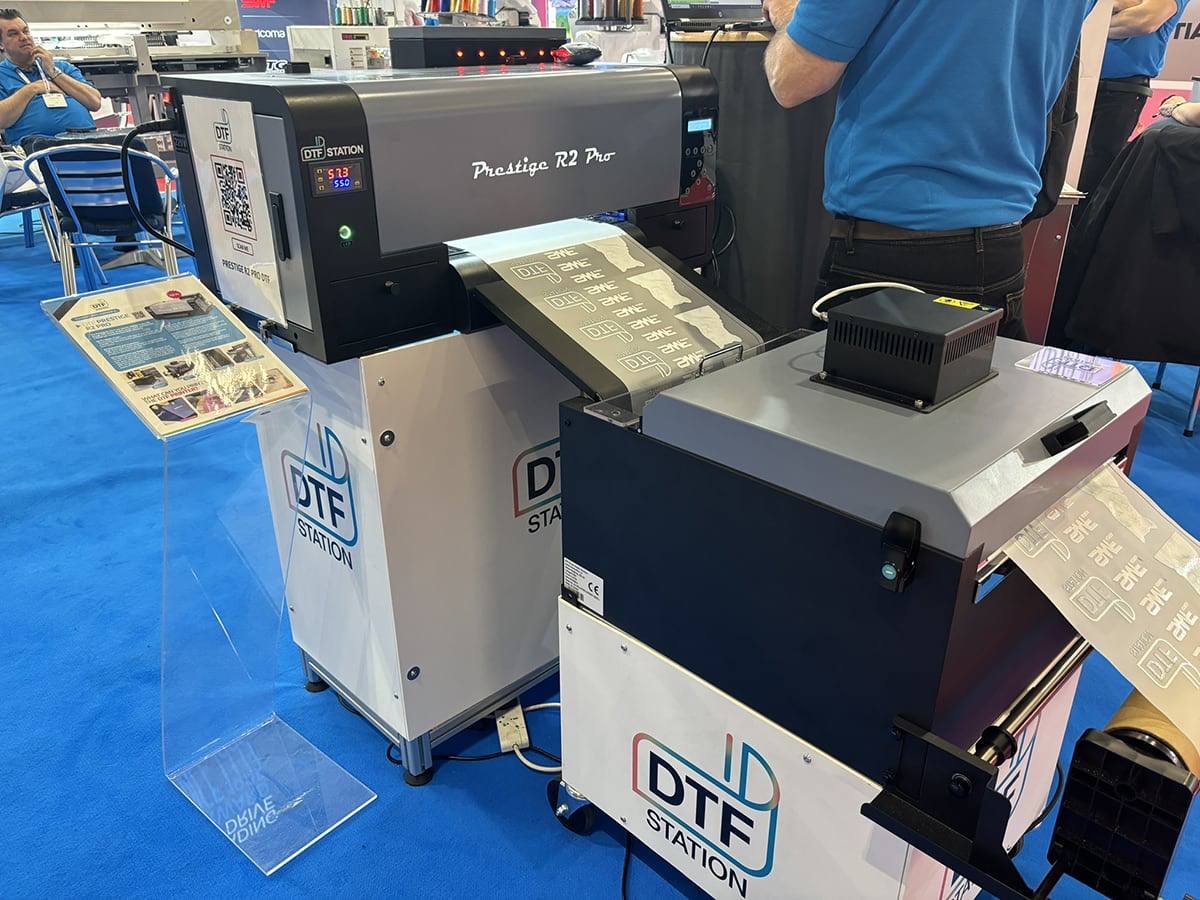 Prestige R2 Pro A3 DTF Printing Solution
 Heat Transfer: After curing, the next step is to transfer the design onto the substrate using a heat press machine. This involves applying heat and pressure to melt the adhesive powder and adhere the design onto the fabric. Proper temperature, time, and pressure settings are critical in this process, necessitating adherence to the supplier’s guidelines for achieving optimal results.
Peeling: The duration you wait varies depending on the type of film used. For cold peel films, wait until the substrate cools before peeling off the cover sheet. With Quick Glide instant peel DTF film from DTF Station, you can peel immediately to achieve vibrant colors at lower costs without additional waiting time.
To gain a comprehensive understanding of how DTF printing works, you might want to explore this ultimate guide post or watch the following video:
White Toner Printer vs DTF Printer: Similarities
While white toner printers and DTF (Direct-to-Film) printers may appear to be distinct printing systems, they share several similarities in their operational principles and applications.
Direct-to-transfer Essence: Both white toner printers and DTF printers do not print directly on substrates like DTG printers. White toner printing uses Sheet A to receive designs, whereas DTF uses a film to transfer designs onto substrates. In both printing techniques, designs are first printed onto transfer materials (either transfer film or transfer paper) before being transferred onto substrate surfaces.
Adhesion Coating: Both techniques require strong adhesion for designs to stick to substrates. DTF printing uses adhesive powder melted with inks for excellent stretchability and durability. In contrast, white toner printing uses glues on Sheet B to ensure designs adhere to substrate surfaces.
Heat Press Is Essential: Both white toner printing and DTF printing require a heat press machine. This tool is crucial for either performing thermal transfer or activating the adhesive properties of hot melt powder or glues on Sheet B.
Full Color Printing: Both white toner printers and DTF printers can print full-color images. Despite being different printing systems, both support CMYK+White colors.
White Base Color: Both techniques require a white base color for CMY or CMYK colors. For black backgrounds, you can utilize the KnockMeBlackOut feature or adjust layer thickness or transparency to achieve optimal results.
Transfer Business: With both techniques, you can start a transfer business rather than selling printed items directly.
White Toner Printer vs DTF Printer: Differences
To make an informed choice between a white toner printer and a DTF printer, it’s crucial to understand the distinctions between these two printing systems. To clarify and simplify this understanding, we have outlined key differences that are essential for your decision-making:
Working Process: Although both use a direct-to-transfer process, the overall workflows of white toner printers and DTF printing are quite different. The main differences lie in the powder shaking and curing processes of DTF printing, as well as the sheet marrying process of white torner printing.
Liquid Ink vs. Powder Ink: One of the most significant and obvious differences between these two printing systems is that DTF printers utilize a liquid ink printing system, whereas white toner printers use dry toner powder for printing. Because of these different ink systems, white toner printers generally require much less maintenance, while DTF printers may need regular maintenance on a daily, weekly, or monthly basis.
Color Vibrancy: While white toner printers require less maintenance, there is a trade-off in terms of print quality and efficiency. When it comes to color vibrancy, although both printing techniques enable full-color printing, prints from white toner printers can appear slightly duller and more faded compared to those from DTF printing.
Transfer Size: White toner printers typically print on sheets, while DTF printers can print on both sheets and rolls. The roll-to-roll DTF printer enables designers to create larger designs, which white toner printers may not accommodate. Although the size difference might not always be crucial, for businesses needing to print on extra-large garments or advertising materials, a DTF printer is the preferred solution due to its ability to handle larger print sizes.
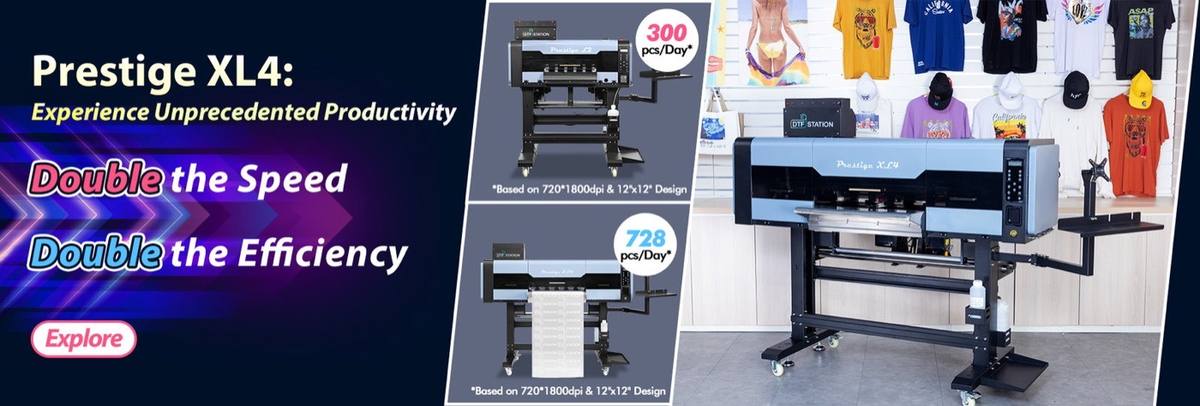
Productivity: While white toner printers are faster for print-on-demand tasks or small batch orders, the marrying process of Sheet A and Sheet B, along with the post-press procedures, makes them less favorable for larger order quantities. In contrast, an automated DTF printing setup allows businesses to process over a hundred designs per hour with minimal human intervention (for example, our latest DTF printer, Prestige XL4, can print over 700 pieces of 12″ x 12″ designs per day). Therefore, DTF printing is a better solution for businesses with higher daily printing demands.
Application: DTF printing is primarily designed for and ideal for textile printing, while white toner printers can handle both fabrics and rigid hard surfaces such as wood, ceramic, glass, and more. Therefore, if your business extends beyond fabric printing, the latter might be a better option to expand your product offerings.
 DTF Printed Projects
 Durability: DTF printing is recognized for its excellent stretchability and resistance to washing. Depending on the media, white toner prints typically endure about 25 washes (standard) to an estimated 50 washes (premium). Our direct-to-film prints are designed to last 50+ washes, after which some loss of vibrancy may occur with repeated washing cycles. To maintain optimal color vibrancy over time, proper care and storage tips are essential. For detailed guidance, you can explore our tips on prolonging the longevity of DTF shirts.
Touch Feeling: In terms of tactile feel, DTF prints offer a soft touch, though designs with large color blocks may have a slighter plastic feel compared to sublimation and DTG printing. White toner prints also impart a thicker texture to patterns.
Complete Solution: DTF Printing typically requires a DTF printer, a powder shaker, a curing oven, and a heat press as part of the complete solution. In contrast, white toner printing is much simpler, requiring only a heat press to operate. However, it’s worth noting that while DTF printing involves a more complex setup, there are solutions available that integrate the powder shaking and curing processes. This allows users to obtain ready-to-press transfers with just a single click of the print button, significantly boosting productivity and reducing labor costs.
Initial Investment Costs: While a decent white toner printer alone usually costs more than a DTF printer, the total cost of a complete white toner printing solution (white toner printer + heat press machine) tends to be cheaper than that of a complete DTF printing solution (DTF printer + powder shaker + curing oven + heat press). For print-on-demand tasks, many DTF printer users often opt to do the powder shaking manually to save on space and budget.
Consumable Costs: While the initial costs for a white toner printing solution are somewhat lower than those for a DTF printing solution, the consumable costs for white toner printing are significantly higher. This makes DTF printing a more economical choice in the long run. For businesses aiming for long-term development and growth, the higher initial investment in a DTF printing solution can be quickly offset by the lower ongoing costs of consumables, making it a more cost-effective option over time.
White Toner Printer vs DTF Printer: the Pros and Cons
After comparing all the similarities and differences, we now have a clear understanding of both printing techniques. To make it even easier for businesses to choose the right printing solution, the following comparison table might save you a lot of time:
| Feature | White Toner Printer | DTF Printer |
|---|---|---|
| Color Vibrancy | Good | Excellent |
| Productivity | Moderate | High |
| Maximum Print Size | Limited | Larger (roll-to-roll capability) |
| Application | Fabric & Hard Surfaces | Fabric |
| Durability | Good | Excellent |
| Touch Feelings | Slightly Rougher | Softer |
| Initial Cost | Lower | Higher |
| Consumable Costs | Higher | Lower |
| Long-term Cost Efficiency | Lower | Higher |
| Maintenance | Zero Maintenance Requirement | Require Regular Maintenance |
| Easy to Use | Excellent | Good |
| Ideal for | Smaller, Short-term Projects | Medium to Large Projects, Long-term Growth Projects |
Though not all aspects are listed in the above comparison table, we have included what we believe are the most important factors for business owners to make an informed decision. We hope this table helps you choose the right solution for your business. If you think there are other factors that should be included, please feel free to leave a comment.
White Toner Printer vs DTF Printer: What’s Best for Your Business?
After discussing all the similarities, differences, pros, and cons of white toner printers and DTF printers, the final question remains: what is the best solution for your business? Though we have listed the advantages and disadvantages of both printing techniques, there is no one-size-fits-all answer. It ultimately depends on your business requirements and what you believe is most important for your operation. If you have not started your printing business yet, you might want to check our following content:
When to choose white torner printers over DTF printers?
For Versatile Applications: If you plan to offer a wide range of customized items, including both fabrics and rigid surfaces, a white toner printer could be an excellent solution to start your business. It can effectively handle diverse materials and meet your needs for versatility.
Ease of Use: If ease of use and minimal maintenance are priorities, white toner printers are often easier to manage and maintain compared to DTF printers, which require more setup and handling.
Lower Initial Investment: For those looking to start with a lower initial investment and focus on specific types of products or designs, a white toner printer can be an economical choice.
Smaller Print Runs: For businesses focusing on smaller print runs or custom designs, a white toner printer may be more cost-effective and practical.
When to choose DTF printers over white torner printers?
Advanced Print Quality: For achieving high color vibrancy and intricate detail, especially on dark or colored fabrics, DTF printers often provide superior results due to their advanced ink and powder technology.
Larger Print Runs: If you need to handle large volumes of printing or produce bulk orders, DTF printers are more efficient and cost-effective for high-volume production.
Operation Flexibility: DTF printers are versatile enough to handle both print-on-demand orders and bulk orders, offering business owners greater flexibility. Whether you need to fulfill custom, small-quantity requests or manage large-scale production runs, DTF printers can accommodate both, making them an excellent choice for businesses that require adaptability in their printing operations.
Larger Print Sizes: For projects requiring larger print sizes or roll-to-roll capabilities, DTF printers excel due to their ability to print on larger sheets and rolls.
Durability: If durability is a key concern, such as for outdoor or heavily used items, DTF prints generally offer better longevity and resistance to wear and tear.
Cost of Consumables: If long-term cost efficiency is a priority, DTF printers typically have lower consumable costs compared to white toner printers, especially in high-volume settings.
Combining White Toner and DTF Printers
Although white toner printers and DTF printers cater to different markets, it’s common for users to have both in their workspace. As businesses grow beyond the capabilities of white toner printing, many opt to upgrade to DTF printing for enhanced productivity, better print quality, and greater cost-effectiveness. Conversely, some DTF users add white toner printers to manage print-on-demand needs due to their ease of use, versatility with various materials, minimal maintenance, and speed for small batches. Ultimately, these two printing solutions can complement each other, creating a more efficient and versatile setup for printing business owners.
Conclusion
In the debate of white toner printer vs DTF printer, both technologies offer unique benefits tailored to different business needs. White toner printers excel in versatility and ease of use, while DTF printers shine with their capability for high-volume, durable prints and larger designs. The right choice depends on whether you prioritize flexibility and simplicity or durability and large-scale productivity. Assessing your business’s specific requirements will guide you to the optimal solution. To dive deeper into how these technologies can transform your printing business, explore our detailed comparison and make an informed decision today.