
UV DTF Printer vs. UV Printer – Choosing the Right Printer for Your Rigid Printing Needs
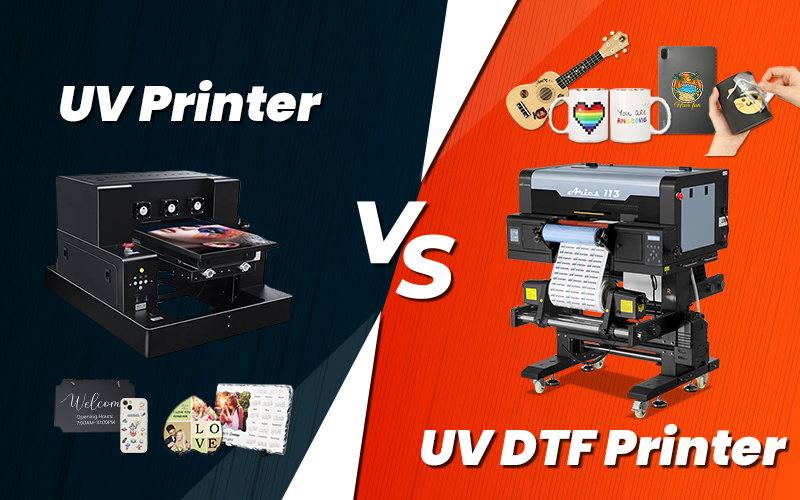
Choosing the right printer for your rigid printing needs can feel overwhelming, especially when faced with options like a UV DTF Printer vs. UV Printer. With advancements in both technologies, each method offers unique benefits for businesses looking to produce vibrant, durable prints on rigid surfaces. But how do you decide which printer will best support your production goals?
In this article, we’ll break down the key differences and similarities between UV DTF and UV printers, exploring the pros and cons of each technique. By the end, you’ll have a clear understanding of which option aligns best with your needs, budget, and business goals. Dive in to make an informed investment that optimizes your rigid printing process and elevates your production quality.
What's UV DTF Printer?
The UV DTF (Direct-to-Film) printer is a breakthrough technology that combines UV printing with Direct-to-Film (DTF) transfer methods, enabling high-quality, durable prints on a wide range of rigid surfaces. Unlike traditional UV printers, which print directly onto materials, UV DTF printers use a transfer film that allows you to print detailed designs on irregularly shaped or hard-to-print items like glass, metal, wood, and plastic. This approach not only expands the variety of surfaces you can decorate but also ensures that prints maintain excellent adhesion and scratch resistance, even on challenging substrates.
For businesses seeking flexibility and versatility, UV DTF printers are an attractive solution. They open new possibilities for customizing products and offer a simple process that requires minimal handling or additional curing. With vibrant color results, ease of use, and broad material compatibility, UV DTF printing has become a valuable tool for companies looking to expand their product offerings and achieve standout, professional-grade results.
How Does a UV DTF Printer Work?
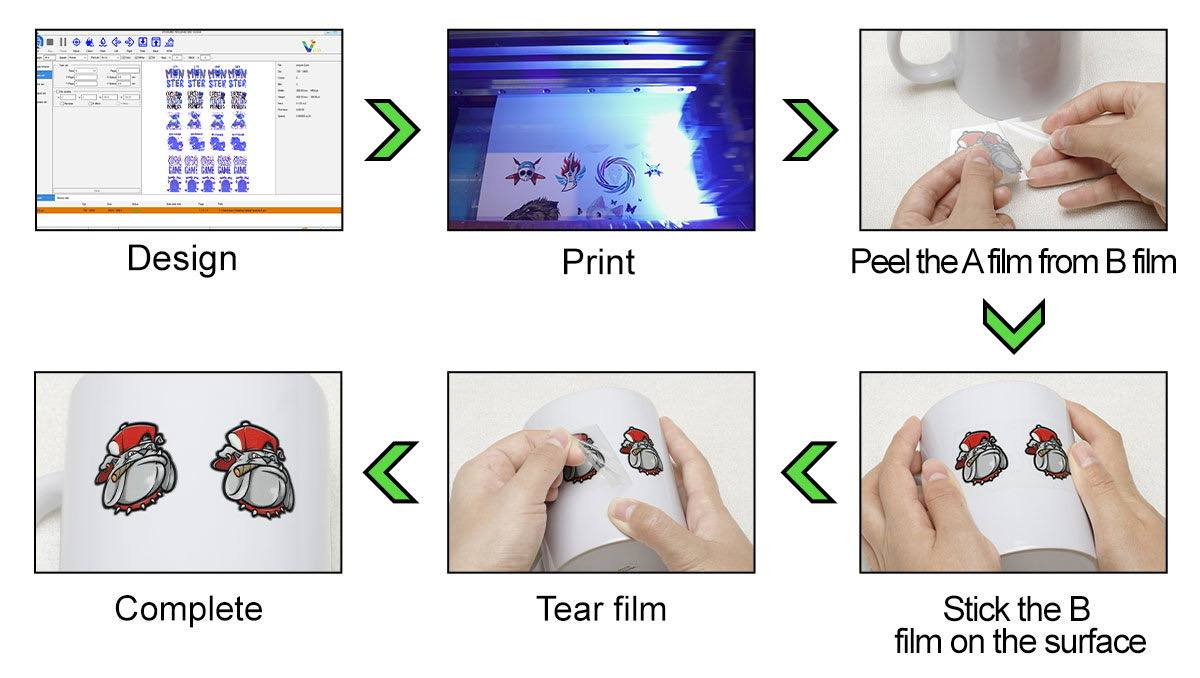
- Create Your Design: Design your image in software with the correct color and size specifications.
- Print Your Design Onto Film A: Print directly onto the transfer film using UV ink for vibrant, detailed prints.
- Laminate Film B to Film A:Attach Film B to Film A with Laminator.
- Peel Off Film A: Remove Film A to prepare it for secure application
- Place Film B on Surface: Align and place the film with design onto the target surface (e.g., glass or metal).
- Press and Peel: Press the film down, then peel it off to transfer the design.
What is a UV Printer?
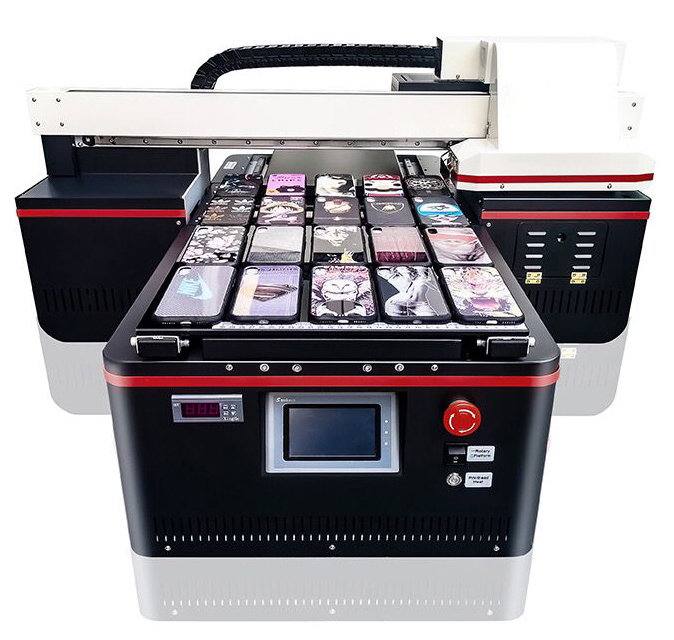
A UV printer, also known as a UV flatbed printer, is a versatile printing technology that uses ultraviolet (UV) light to instantly cure or dry ink as it is printed. This allows it to print directly on a wide variety of materials, including flat and rigid surfaces like glass, metal, wood, and plastic. With the addition of a rotary tool, UV printers can even print on curved objects such as drinkware, including bottles and mugs. The UV ink is immediately cured by UV light, resulting in vibrant, durable prints that resist fading, scratches, and smudging. This makes UV printers an excellent choice for businesses seeking high-quality, long-lasting prints on both rigid and flexible substrates.
How Does a UV Printer Work?
- Create Your Design: Design your image in software.
- Inkjet Printing: The printer sprays UV inks onto the substrate.
- UV Curing: UV light instantly cures and hardens the ink.
UV DTF Printer vs UV Printer: Key Similarities
Both UV DTF and UV printers offer powerful printing solutions. This section explains the key similarities between UV DTF and UV printers, giving you the insight needed to choose the best option for your printing requirements.
Versatile Surface Compatibility
Both UV DTF and UV printers can print on a wide variety of rigid surfaces, including metal, glass, wood, and plastics.
Minimal Setup Time
Both technologies allow for quick setups, reducing downtime between print jobs and enhancing overall workflow efficiency.
Instant Curing with UV Light
Both use UV light to instantly cure the ink, ensuring quick drying and vibrant, durable prints.
Durability
Prints from both types of printers are highly resistant to fading, scratches, and smudges, ensuring long-lasting results.
High-Quality Prints
Whether using a UV DTF or UV printer, both technologies produce high-resolution, detailed, and vibrant prints.
Cost-Effective for Small Runs
Both printers offer efficiency for small-batch production runs and cost-effective solution for small businesses sizes.
UV DTF Printer vs UV Printer: Key Difference
The primary difference between UV DTF printers and UV printers lies in their printing methods and workflow. UV DTF printers use a transfer process, where designs are first printed onto a transfer film before being applied to the substrate, adding extra steps to the workflow. In contrast, UV printers print directly onto the surface, streamlining the setup and reducing production time by eliminating the transfer step.
While UV printing requires fewer steps with its direct-to-surface method, UV DTF printers like the Aries 113 and Aries 124 integrate both printing and laminating into a single, compact machine. This makes it incredibly easy and fast to produce ready-to-use stickers, offering a simplified workflow while still maintaining high-quality output.
UV DTF Printer vs UV Printer: Pros & Cons
When deciding between a UV DTF printer and a UV printer, understanding the strengths and limitations of each is essential. Both technologies offer unique benefits and drawbacks that can impact efficiency, cost, and versatility in your printing projects. In this section, we’ll break down the pros and cons of each type, helping you weigh your options and choose the best fit for your business needs.
Pros & Cons of UV DTF Printer
- Perfect for Uneven Surfaces: UV DTF printers can print on surfaces with textures, curves, or irregularities, making them ideal for versatile applications across various items.
- No Size Limit: Unlike UV printers, UV DTF printers allow flexible sizing, as the transfer film can be cut or adjusted to fit different dimensions.
- Faster Output: With integrated printing and laminating in one machine, roll-to-roll UV DTF printers streamline production, providing faster, ready-to-use prints & stickers.
- Stock-Ready Convenience: UV DTF printers allow businesses to create and store stickers in advance, ready for application when orders arrive or for direct sale to customers. UV printers, on the other hand, lack this flexibility.
- Additional Application Steps: UV DTF printing requires laminating and transferring designs onto substrates, adding extra steps that make the process more involved compared to direct UV printing.
- Challenging for Large-Format Applications: UV DTF printing can be more challenging for large designs, as applying the transfer onto oversized surfaces requires extra care and precision.
Pros & Cons of UV Printer
- Limited to Flat or Smooth Surfaces: UV printers are best for flat, rigid materials and require additional tools for items like bottles or mugs. On highly irregular surfaces, UV printing is impossible at all.
- Limited Print Size: UV printers often have a limited print area, making them less versatile when it comes to larger print sizes.
- Slower Production Speed: While UV printing has fewer setup steps, its printing speed is slower compared to roll-to-roll UV DTF printers, which can impact efficiency in high-volume production.
- Limited Convenience for Inventory: Unlike UV DTF printers, UV printers don’t allow for pre-made, storable transfers, restricting businesses to on-demand printing and reducing inventory flexibility.
- Direct-to-Substrate Printing: UV printers print directly onto substrates with no extra steps, making the process quick and straightforward for users.
- Simplified Large-Format Printing: UV printers handle large graphic designs with ease, providing a straightforward solution for big-format prints.
UV DTF Printer vs. UV Printer: Which Is the Right Solution for Your Business?
When deciding between a UV DTF printer and a UV printer, it’s important to consider specific business scenarios and needs. Each method excels in different situations, so understanding when to choose one over the other can significantly impact your efficiency and product quality. Below, we outline key scenarios where either UV DTF or UV printing may be the ideal solution for your business.
When to Choose UV DTF Printer?
For Uneven or Curved Surfaces
UV DTF printers handle irregular shapes and uneven surfaces, ensuring high-quality prints on items that UV printers can’t manage. They are perfect for businesses printing on items like phone cases, promotional products, or custom drinkware (mugs, bottles).
Flexibility in Sizing
If your business offers a wide range of product sizes, such as custom t-shirts, banners, or small accessories, UV DTF printers are ideal. They let you print transfers that can be cut and resized to fit various dimensions, offering flexibility that UV printers can’t provide.
For High-Volume Orders
For print shops or businesses with quick turnaround times, UV DTF printers streamline the process by combining printing and laminating in one machine. This is perfect for high-volume orders like custom stickers, decals, or labels, where speed and efficiency are key.
For On-Demand Sales
UV DTF printers allow you to pre-produce stickers and transfers in bulk, which can be stored and applied to products as orders come in. This is a great advantage for businesses in custom packaging, e-commerce, or retail, where having ready-to-use inventory helps you save time and fulfill orders faster.
Check UV DTF PrintersWhen to Choose UV Printer?
For Small-Sized Flat Products
UV printers are ideal for printing on smaller, flat items such as phone cases, keychains, or business cards. If your business specializes in creating personalized gifts, promotional products, or custom accessories, a UV printer offers quick, high-quality prints directly onto these substrates with minimal setup.
For Full-Size Graphic Designs
For businesses working with large graphic designs within the printing area of a UV printer, such as banners, signs, and posters, UV printers are an excellent choice. Their ability to print directly on large substrates without requiring additional steps allows for streamlined production of high-quality full-size graphics, perfect for events, retail displays, or large-scale advertisements.
Contact Us
Have questions about UV DTF or UV printers? Our team is here to help you make the best choice for your business needs. Fill out the form below, and we’ll provide you with personalized recommendations and solutions tailored to your printing projects.