
UV DTF Transfers Explained: Top 10 Questions Answered
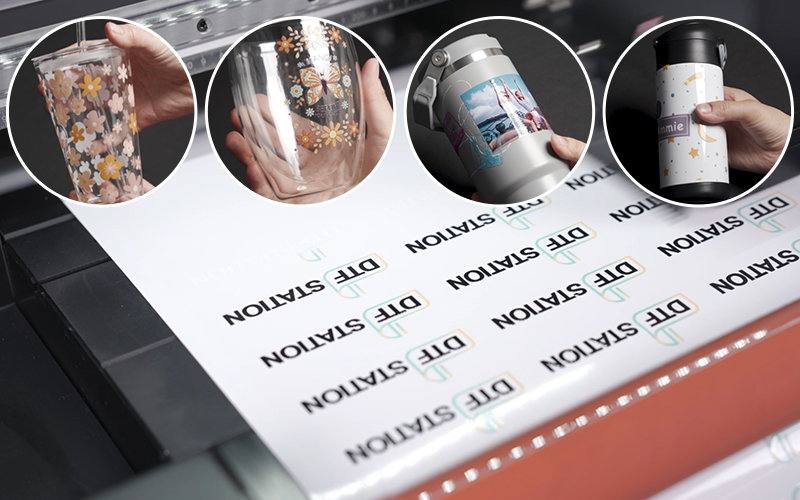
The recent surge in UV DTF printers has led to a growing popularity of UV DTF transfers in the customization industry. UV DTF transfer wholesale offers promising business opportunities for home business runners and entrepreneurs. However, fierce competition in the industry demands that business runners possess deep insights and understanding of this new technology to survive and thrive. In this post, we’ve compiled the 10 most common questions about UV DTF transfers to equip you with essential knowledge and information for developing a solid business plan.
Table of Contents
- What are UV DTF transfers?
- What are the benefits and advantages of UV DTF transfers?
- What surfaces are suitable for UV DTF transfers?
- What are UV DTF transfers used for?
- How durable are UV DTF results?
- Are UV DTF transfers dishwasher safe?
- How to design UV DTF transfers for cups?
- How to make UV DTF transfers?
- Are UV DTF printers easy to use?
- How to apply UV DTF transfers?
- Conclusion
What are UV DTF transfers?
UV DTF transfers are stickers printed using a UV DTF printer and are extensively used in packaging customization, promotional merchandise, personalized gifts, and other sectors of the customization industry. UV DTF printing represents a cutting-edge technology that employs UV-curable inks to print designs onto Sheet A. Subsequently, Sheet B is laminated onto Sheet A using a laminator, which applies adhesive glue to the designs, resulting in vibrant stickers. This process ensures the creation of durable and visually striking stickers suitable for a wide range of applications.
What are the benefits and advantages of UV DTF transfers?
Compared to regular stickers printed with other techniques, UV DTF transfers offer numerous benefits. Below are some key advantages and reasons why UV DTF is currently trending in the market:
- Perfect for Uneven Surfaces: Enables customization on uneven, cylindrical, or conical surfaces, freeing designers from traditional printing limitations.
- Photo-realistic Details: Produces high-resolution images with vibrant colors, achieving stunning, lifelike prints suitable for detailed designs.
- Enhanced Durability & Adhesion: UV DTF printing technology offers exceptional durability and superior adhesion compared to conventional methods, ensuring long-lasting prints.
- Super Versatile: UV DTF excels in simultaneous white, color, and varnish printing, allowing for vibrant colors and embossed effects, ideal for intricate 3D designs.
- Minimal Manual Processes: Streamlines workflow by eliminating steps like silk screen printing or vinyl cutting, saving time, effort, and costs.
- No Heat Press Required: Provides a user-friendly alternative to heat transfer methods like HTV or silk printing, with easy usability and quick setup.
- Faster Output: Requires no masking, weeding, or pretreatment, making it significantly faster for mass-producing stickers compared to other techniques.
- Environmentally Friendly: Eliminates the need for messy and hazardous materials used in silk screen printing, promoting a cleaner and safer printing process.
What surfaces are suitable for UV DTF transfers?
UV DTF transfers or stickers are primarily designed for decorating hard surfaces, making them most effective on rigid substrates. While they can also be applied to fabrics, their durability may be compromised compared to their performance on hard surfaces, potentially leading to cracking or peeling over time.
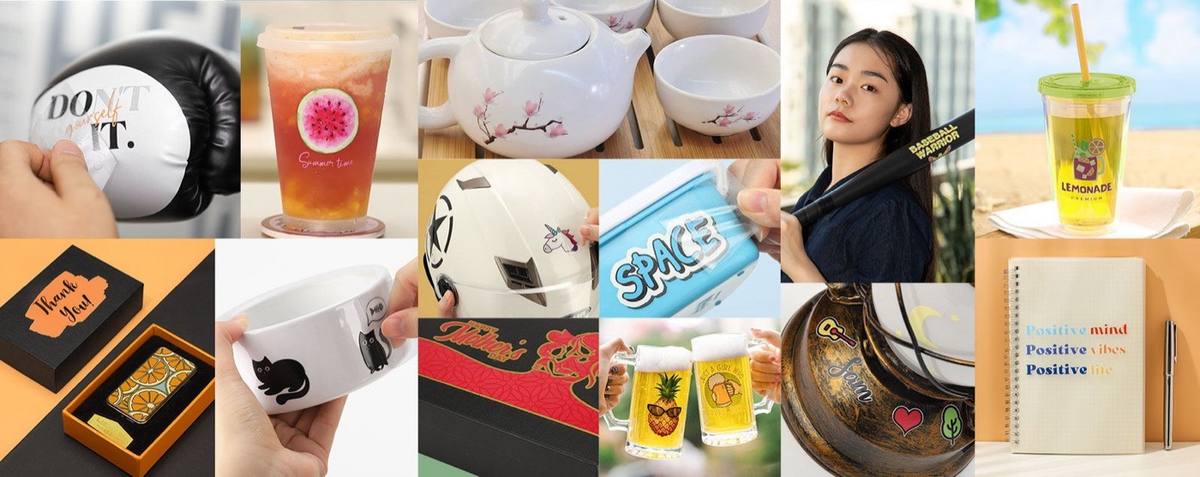 UV DTF Printed Custom Sticker Application Scenarios
 UV DTF transfers are renowned for their ability to adhere to uneven, cylindrical, or conical surfaces. However, they exhibit superior adhesion and durability when applied to smooth surfaces. This ensures a longer-lasting finish and enhances the overall quality of the decoration. Smooth surfaces provide a stable base for UV DTF transfers, allowing them to maintain their integrity and visual appeal over extended periods.
What are UV DTF transfers used for?
Due to their outstanding performance, UV DTF transfers are the preferred choice for businesses of all sizes across various industries. Here are some major markets where UV DTF stickers excel:
Packaging Customization: UV DTF transfers offer vibrant colors and excellent adhesion to different packaging materials, enhancing brand visibility and product appeal. Popular applications include custom labels for gourmet food packaging and personalized stickers for luxury cosmetic products.
Promotional Merchandise: UV DTF allows for high-definition printing and intricate designs, making promotional items stand out with eye-catching graphics. For instance, wholesalers use DTF printers to create custom decals for trade show giveaways and branded stickers for corporate gifts.
Personalized Gifts: UV DTF transfers provide design flexibility and can be customized with individual names or messages, adding a personal touch to gifts. Popular ideas include custom stickers for wedding favors and personalized decals for holiday presents.
Home Decor: UV DTF transfers adhere well to various surfaces and offer matte or glossy finish options, enhancing home decor aesthetics. Many homeowners use customized decals for wall art and personalized stickers for furniture accents to complement their decor styles.
Fashion and Apparel: The vibrant colors produced by UV DTF printers make them ideal for branded stickers on clothing hangtags and personalized decals for sports apparel.
Events and Entertainment: UV DTF prints offer quick turnaround times and can be produced in small or bulk quantities, meeting tight deadlines for event promotions.
How durable are UV DTF results?
In UV DTF printing, ink is cured with UV light, which allows for deeper absorption and a stronger bond with the material. The molecular structure of the ink is altered by the UV light, creating a more robust bond and enhancing adhesion to the surface.
This results in a print that is more resistant to external factors like light, water, and friction, as well as issues such as wear and color fading. UV DTF prints typically last over 3 years but their lifespan depends on material quality, UV exposure, and maintenance.
Are UV DTF transfers dishwasher safe?
While UV-curable inks used in this printing method are typically durable and resistant to water, they may not always withstand the high heat and harsh detergents commonly found in dishwashers.
The heat, water pressure, and detergents in dishwashers can potentially degrade the ink over time, resulting in fading, peeling, or other deterioration of the design. To maintain the quality of UV DTF wraps, it is often advised to hand wash them using mild soap and warm water. This gentler cleaning approach helps prolong the lifespan of the printed design.
How to design UV DTF transfers for cups?
Although UV DTF transfers allow users to adhere small elements to cups individually, designing a full wrap can save time and produce more impressive results by pre-planning the placement of each design element. To achieve optimal results, consider the following design tips:
Consider the Cup’s Shape and Curvature: Before designing, it’s crucial to understand the printable area of your cups to ensure the transfers fit perfectly. Although there are various cup sizes and shapes, you can easily find ready-to-use design templates online. You can also find online design tools that allow users to get design templates by entering the top diameter, bottom diameter, and slope height of the cup.
Avoid Edges: When designing, avoid placing elements too close to the edges. This helps prevent potential distortion and ensures a clean appearance. Additionally, keeping designs away from areas that come into contact with the mouth can minimize any potential safety concerns.
How to make UV DTF transfers?
To create a UV DTF transfer or sticker, you’ll need essential equipment, supplies, and accessories, including a UV DTF printer, laminator, UV DTF inks, Sheet A, and Sheet B. The process involves two major steps: printing and laminating. For more detailed information, you can check our ultimate guide on starting a custom sticker business or watch the following videos:
Are UV DTF printers easy to use?
UV DTF printing is a straightforward technology that requires less of a learning curve compared to other printing methods. However, whether UV DTF printers are easy to use depends on a few factors:
Printer Design & Settings: When assessing the user-friendliness of a UV DTF printer, the primary consideration is its original design. An intuitive design can significantly reduce the learning curve, enabling even beginners to quickly grasp the printer’s operation and start printing like seasoned users with minimal training and practice. Such a printer not only enhances productivity but also efficiency in order fulfillment. For instance, the Aries 113 has integrated the laminating function into the machine itself, streamlining the entire process compared to earlier desktop versions that required a separate laminator for attaching adhesive glue to sheet A.
Software: UV DTF printers typically come bundled with software as a complete package for sale. High-quality software is designed with user-friendliness in mind, ensuring ease of use. Therefore, it’s advisable to consider the software supplier when selecting a UV DTF printer for your business.
Training & Educational Resources: In addition to hardware and software, tutorial videos, user manuals, and other resources play a crucial role in helping beginners quickly familiarize themselves with the machine. This is why DTF Station offers an extensive library of over 800 videos. These include tutorials, maintenance guides, troubleshooting tips, and practical advice, covering the entire process. DTF Station also conducts dealer workshops and online webinars to continually support both users and dealers with valuable resources.
How to apply UV DTF transfers?
Applying UV DTF transfers or stickers to cups, tumblers, mugs, and other substrates is generally straightforward compared to other custom printing technologies. However, taking additional steps can significantly enhance durability and results. These steps typically include:
- Step 1: Thoroughly wash and clean the cup, then dry it with a cloth.
- Step 2: Cut out the UV DTF stickers according to your desired design.
- Step 3: Remove a 1-inch width of backing from the edge of the UV sticker to expose the adhesive area.
- Step 4: Carefully position the adhesive area on the cup, ensuring the design is straight.
- Step 5: Roll the cup to gradually remove the backing of the sticker, ensuring the adhesive securely adheres to the cup until the entire wrap sticks.
- Step 6: Apply pressure to the sticker for 3-5 minutes using your palm to activate the adhesive with body heat, facilitating easier peeling.
- Step 7: Slowly peel off the cover sheet, gently pressing down any lifted parts and re-peeling if necessary.
- Step 8: Smooth out the decal with your fingers and palm from the center to the edges, ensuring no bubbles remain in the design.
Conclusion
In conclusion, UV DTF transfers offer a cutting-edge solution for high-quality, durable printing across a wide range of surfaces. Their versatility and ease of use make them a top choice for both professionals and enthusiasts looking to enhance their projects. If you found this guide helpful, we’d love to hear your thoughts or answer any remaining questions you might have. Share your experiences with UV DTF transfers in the comments below and don’t forget to share this post with others who might benefit from it!